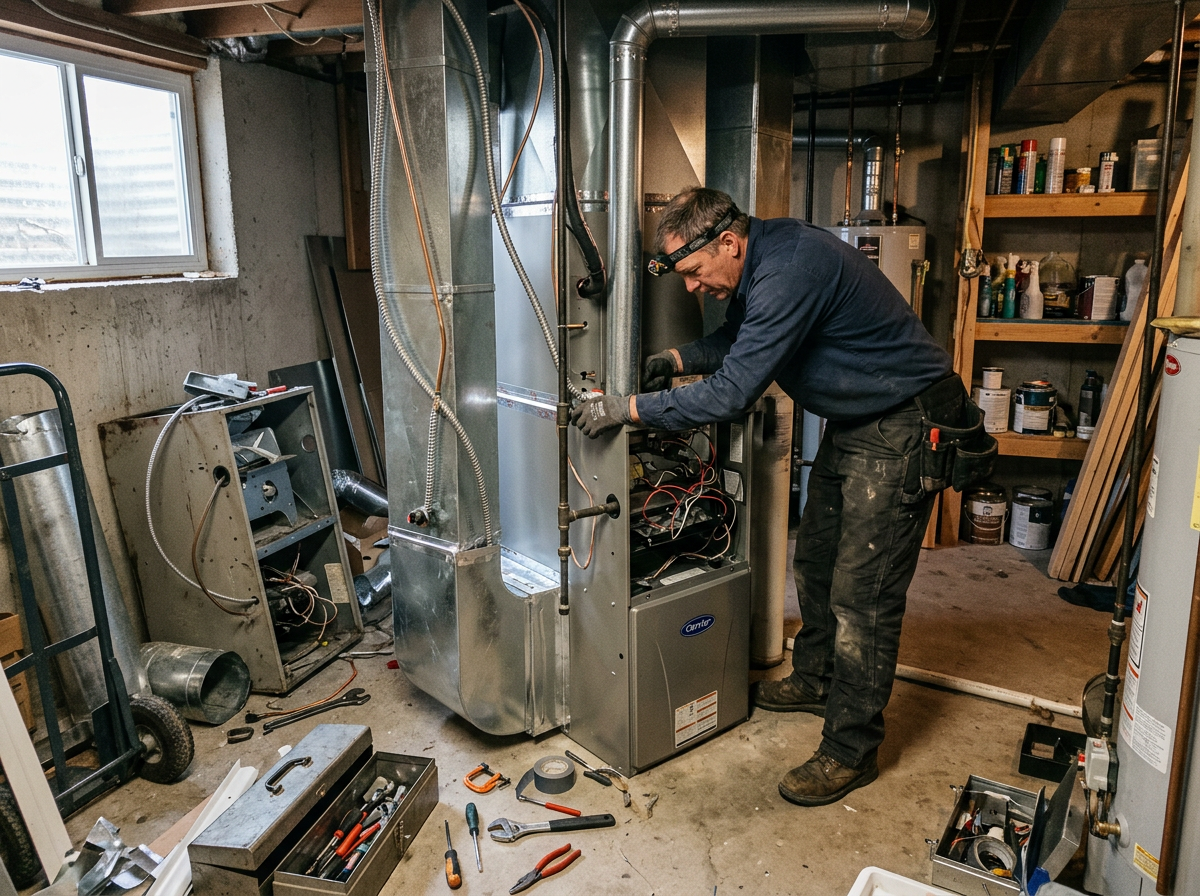
Falcon sits higher than Colorado Springs on the approach to the Palmer Divide, so gas furnaces here need proper orifice changes and capacity adjustments to avoid short cycling once winter sets in. Newer rural subdivisions mean crews often work with longer refrigerant lines and larger lots that affect placement of outdoor units and condensate drainage. The drive north from Colorado Springs along I-25 usually takes twenty to twenty-five minutes, letting the same technicians reach Falcon addresses without the narrow-street constraints found in Manitou Springs.
Heating seasons run longer in Falcon than in Pueblo or Canon City because of the extra elevation and snow exposure, while cooling loads stay lighter than in the lower Arkansas Valley towns. Homes here are mostly post-2000 construction with modern duct layouts, yet the open terrain exposes equipment to stronger winds and drifting snow that can block intakes. Technicians adjust maintenance schedules accordingly, checking for ice buildup on rooftop units and ensuring proper combustion air on rural properties.
Because Falcon properties spread out along county roads rather than tight city blocks, service calls focus on vehicle access and equipment staging before work begins. Furnace sizing calculations must account for the four-percent derate per thousand feet above two thousand, which changes recommendations compared with jobs in downtown Colorado Springs.
Around Falcon
We regularly work near:
- 📍Falcon High School
- 📍Woodmen Hills Recreation Center
- 📍Meridian Ranch
- 📍Falcon Highway at Meridian Road
- 📍Woodmen Hills Drive
Furnace Repair in Falcon — Local Notes
- •Newer rural homes often have extended line-set runs that require careful refrigerant charge verification at altitude.
- •Open lots and wind exposure increase the chance of snow drifting against outdoor units during heavy Palmer Divide storms.
- •Gravel and dirt driveways are common, so technicians plan for vehicle traction and equipment carts on service visits.
- •Elevation above Colorado Springs means orifice and manifold pressure adjustments differ from jobs performed at 6,035 ft.