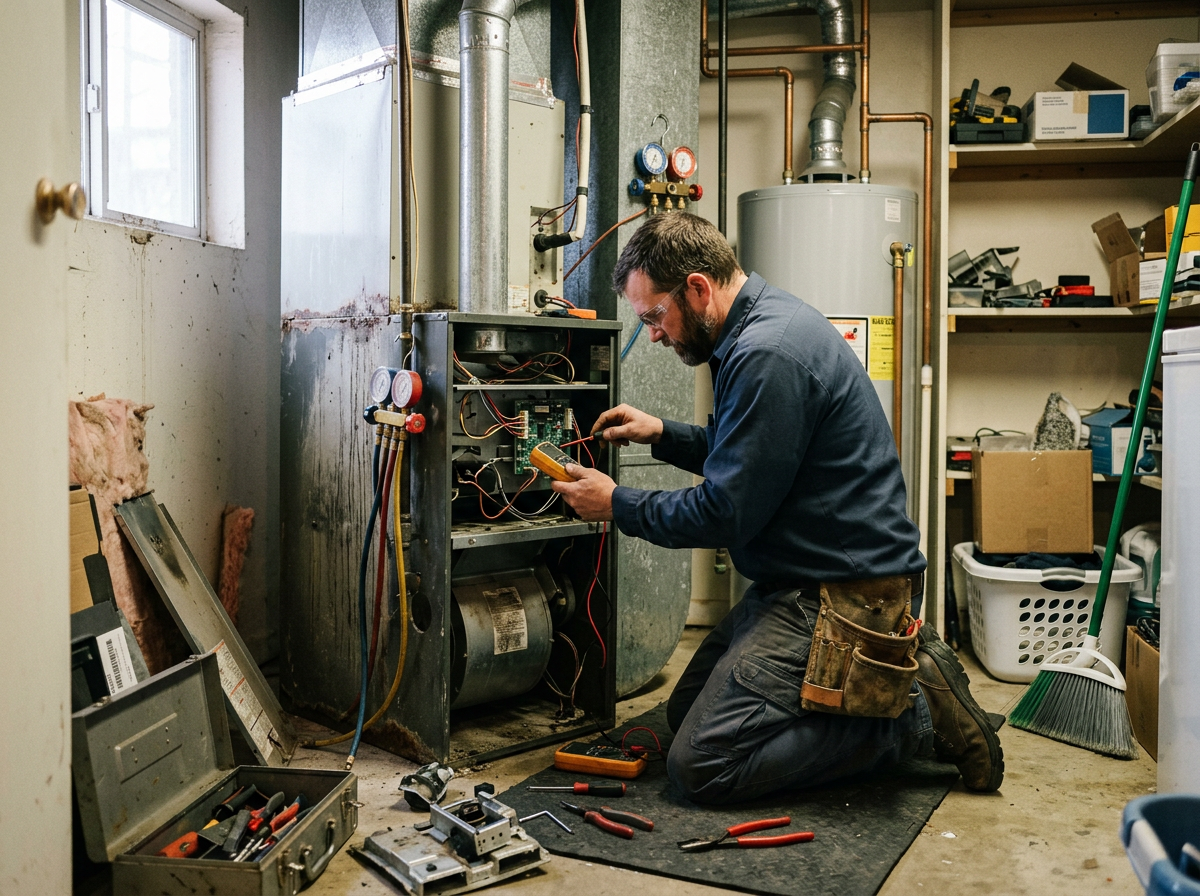
Cimarron Hills sits at roughly 6,200 feet, where gas furnaces lose about 4 percent capacity for every thousand feet above 2,000. That means equipment sized for downtown Colorado Springs or lower-elevation towns like Pueblo will short-cycle or fail to keep up once winter sets in. Crews from Colorado Springs HVAC Pros drive east on Powers Boulevard or I-25, reaching most Cimarron Hills streets in 12 to 18 minutes depending on traffic.
Housing stock here is mostly 1980s through early 2000s single-family homes on standard suburban lots. Many still have original duct runs and single-stage furnaces that need orifice changes and combustion testing at this altitude. Snow lingers longer on north-facing roofs than in warmer Canon City or Pueblo, so attic insulation and condensate lines require extra attention during service calls.
Cooling loads are lighter than in lower towns but still present on summer afternoons. Tight setbacks on some streets mean technicians park on the road and carry tools across lawns, while newer cul-de-sacs east of Powers allow easier van access.
Around Cimarron Hills
We regularly work near:
- 📍Powers Boulevard
- 📍Galley Road
- 📍Peterson Space Force Base
- 📍Sand Creek Trail
- 📍Colorado Springs Airport
- 📍Horizon Middle School
Furnace Repair in Cimarron Hills — Local Notes
- •Elevation-driven derating requires fresh orifice sizing on every furnace replacement; stock parts from lower towns will not work correctly.
- •Many 1980s-1990s homes have flex duct in unconditioned attics that sags and leaks after decades of freeze-thaw cycles.
- •Winter snow loads on roofs often block bathroom and dryer vents, pushing combustion air issues into living spaces.
- •Drive time from central Colorado Springs shops averages 15 minutes via Powers Boulevard, allowing same-day 24-hour response.