2026-09-02 · Mike Torres
Furnace Short Cycling During Colorado's 40-Degree Daily Swings
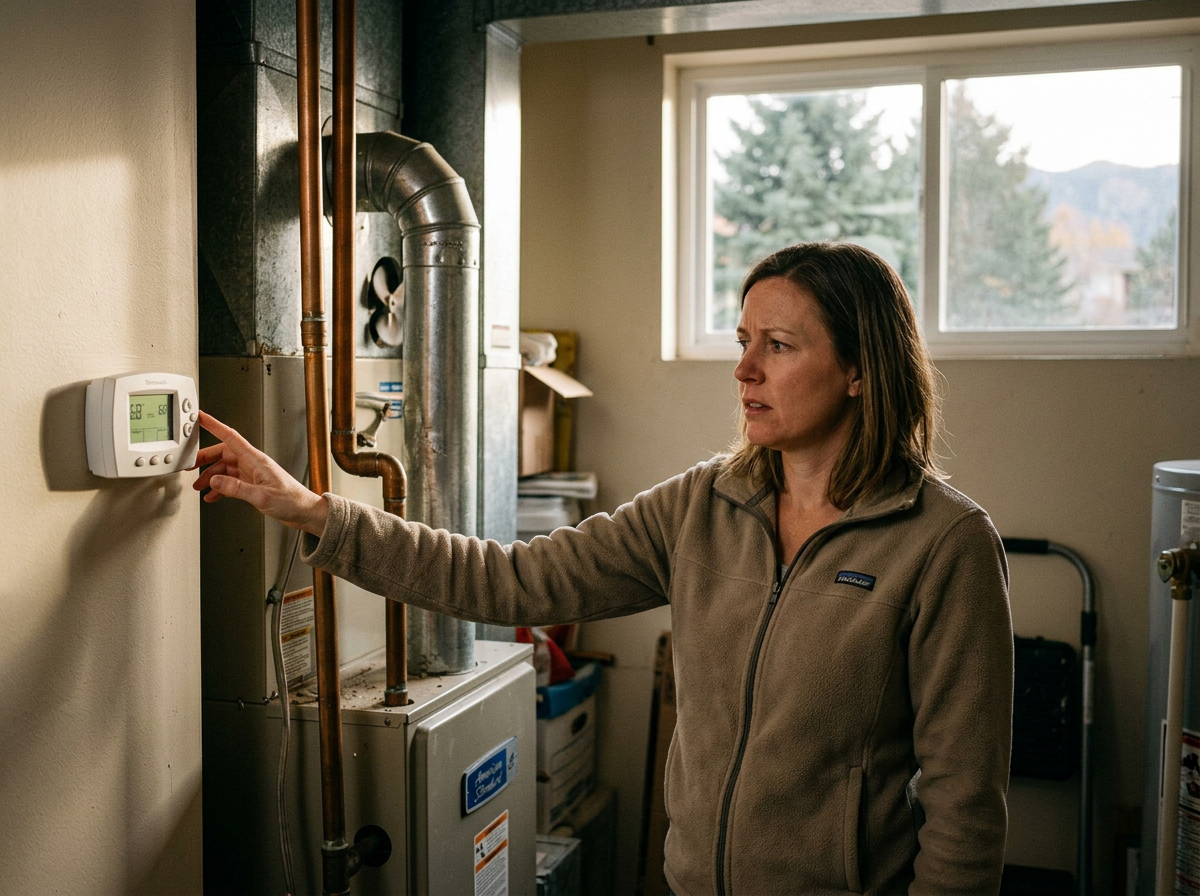
Furnaces in Colorado Springs often short cycle when outdoor temperatures swing 30-40°F in a single day because the system starts during cold dawn hours at 20-30°F but the thermostat satisfies quickly once chinook winds push afternoon readings into the 50s or 60s, resulting in run times of only 5-10 minutes rather than the 15-20 minutes needed for proper heat distribution at 6,035 ft elevation.
Elevation Derating and BTU Output
At 6,035 ft, natural gas furnaces lose roughly 4% output per 1,000 ft above 2,000 ft, so a unit rated 80,000 BTU at sea level delivers closer to 64,000 BTU without a high-altitude orifice kit. This reduced capacity forces the burner to fire longer to reach thermostat set points during morning cold snaps, yet the same undersized flame cannot maintain temperature once the house warms and outdoor air rises 30°F by midday. Homeowners in areas such as Woodland Park at 8,465 ft see even greater derating, often 24% total, which shortens cycle length further when the thermostat anticipates a larger load that never materializes. Proper orifice sizing and combustion air adjustments prevent the rapid on-off pattern that wears out igniters and heat exchangers after only 8-12 years instead of the typical 15-20.
Thermostat Behavior During Chinook Winds
Chinook winds can raise temperatures 30-40°F in under two hours, causing the thermostat to cut power to the furnace before the heat exchanger reaches steady state. In dry Colorado air, heat dissipates faster from ductwork and registers, so rooms feel warm enough to satisfy the sensor even though the system has not delivered a full cycle. This pattern repeats daily from October through April, the local heating season, and leads to temperature swings inside the house of 3-5°F that many residents notice as drafts or uneven warmth. Checking the thermostat differential setting and confirming it is not set below 1°F helps, but the underlying issue remains the mismatch between rapid outdoor changes and the furnace's fixed firing rate at elevation.
Signs Your Furnace Is Short Cycling
Watch for these indicators that point to short cycling tied to local conditions: the furnace runs less than 10 minutes per call, the blower shuts off before all registers feel warm, or the unit restarts within five minutes after turning off. At higher elevations such as those between Pueblo at 4,692 ft and Manitou Springs, restricted combustion air from sealed homes can also trigger rollout switches that interrupt cycles. Tracking run times over a 24-hour period with 40°F swings reveals whether the pattern follows temperature changes or points to a separate issue such as a clogged filter reducing airflow across the heat exchanger.
Practical Steps Before Professional Service
Measure supply and return temperatures during a morning cycle to confirm a 30-50°F rise; anything lower suggests the derated output cannot keep up once the swing begins. Inspect the condensate drain and flue for ice buildup common during rapid temperature drops, then verify that any high-altitude conversion kit matches the current elevation. If short cycling continues across multiple days of 30-40°F swings, review repair cost factors in the local market through resources such as what furnace repair costs in Colorado Springs before scheduling furnace repair. A short practical takeaway is to log outdoor temperature and furnace run time for three consecutive days; patterns that match the 30-40°F swings confirm the need for altitude-specific adjustments rather than a full replacement.